

How to Standardise Work Instructions Across Sites in 2026

Post by
John Ansley
August 25, 2026
August 25, 2026
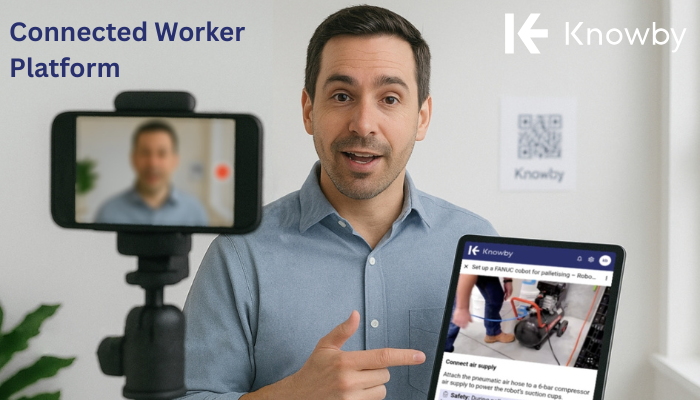
Getting your manufacturing operations running consistently across multiple sites is harder than it sounds. You've probably seen it firsthand—Site A follows one procedure, Site B does something slightly different, and Site C? They've got a veteran operator named Dave who's been doing things "his way" for fifteen years.
That inconsistency creates real problems: quality defects, safety incidents, longer onboarding times, and knowledge that walks out the door every time someone retires or switches jobs. A connected worker platform can help you standardise your digital work instructions across every location—without drowning in bureaucracy or fighting resistance from your teams.
This guide walks you through exactly how to standardise work instructions across your manufacturing sites, from building your foundation to rolling out changes that actually stick.
Key Takeaways: How to Standardise Work Instructions Across Sites
- Site-to-site inconsistency in work instructions leads to quality defects, safety risks, and knowledge loss when experienced staff leave.
- A connected worker platform delivers real-time, mobile-first instructions that keep every site aligned with the same procedures.
- Knowby enables manufacturing teams to create visual, step-by-step instructions that update instantly across all locations.
- Start standardisation by auditing existing processes, identifying critical tasks, and involving frontline workers in content creation.
- Measure success through metrics like first-pass yield, training time reduction, and instruction completion rates across sites.
Why Do Manufacturing Work Instructions Drift Between Sites?
Before you fix the problem, you need to understand why it happens. Work instruction drift isn't caused by careless workers or bad managers—it's a natural consequence of how manufacturing operations evolve.
Each site typically starts with the same documentation. Over time, local teams make small adjustments based on their equipment, their workforce, or the specific challenges they face. Maybe one site has older machinery that requires a workaround. Maybe another site has a supervisor who discovered a faster method.
Those localised changes rarely get documented properly. They become tribal knowledge—passed down verbally from one shift to the next, from experienced operators to new hires. When the original expert leaves, that knowledge either disappears completely or gets distorted through repeated retelling.
What Happens When Instructions Aren't Standardised?
The consequences show up in predictable ways. Quality teams see higher defect rates at certain sites without understanding why. Safety incidents cluster at locations where unofficial shortcuts have become normalised. Training takes longer because new employees learn different versions of the same process depending on who's teaching them.
For operations managers overseeing multiple facilities, this creates a constant firefighting situation. You're reacting to problems instead of preventing them. You're running audits that reveal inconsistencies but struggling to enforce changes that stick.
What Is a Connected Worker Platform?
A connected worker platform delivers digital work instructions, training materials, and operational knowledge directly to frontline workers through mobile devices, tablets, or workstations. Unlike traditional documentation systems that sit in binders or buried on shared drives, a connected worker platform puts the right information in front of workers exactly when and where they need it.
The "connected" part matters. These platforms don't just store documents—they create a live link between your corporate standards, your site-level operations, and your individual workers. When you update an instruction at headquarters, that change flows automatically to every site using that procedure.
Benefits
When you get standardisation right, the benefits compound across your entire operation.
Consistent Quality Output
Every site follows the same procedures, which means your products meet the same standards regardless of where they're made. Customers get predictable quality. Your quality team spends less time investigating site-specific defects.
Reduced Safety Incidents
Standardised safety procedures eliminate the dangerous shortcuts that develop when each site invents its own approach. Workers at any location know exactly what precautions to take because the instructions are identical everywhere.
Faster Onboarding and Training
Digital work instructions accelerate how new hires become productive. Instead of learning from who's available, they follow documented best practices from day one. Knowby's visual, step-by-step format makes instructions easy for workers of all skill levels to follow, which enhances employee onboarding and training.
Knowledge Retention and Transfer
When experienced operators retire or change roles, their knowledge doesn't leave with them. You've captured their expertise in the standardised instructions, improving knowledge retention and making it accessible to everyone who comes after.
Simplified Compliance and Audits
Auditors love consistency. When every site follows documented procedures and you can demonstrate that through completion records and version histories, audits become straightforward instead of stressful.
How Do You Establish Multi-Site Standardisation?
Standardisation projects fail when teams jump straight to creating new documentation without doing the groundwork first. Here's how to build a foundation that supports lasting change.
Step 1: Audit Your Current State
Start by understanding what actually exists across your sites. Collect every version of every work instruction currently in use. You'll probably discover multiple versions of the same procedure, unofficial documents that have become de facto standards, and critical processes that were never documented at all.
Step 2: Identify Critical Processes First
You can't standardise everything at once; you have to prioritise based on impact. Focus your initial standardisation effort on these high-priority areas. Early wins build momentum and demonstrate value to stakeholders across your organisation.
Step 3: Establish Governance and Ownership
Someone needs to own the standardisation process—not just the initial project, but the ongoing maintenance. Define who can create new instructions, who approves changes, and how updates get communicated across sites.
A connected worker platform like Knowby makes this easier with built-in approval workflows and version control. You can set permissions so that local teams can suggest improvements, but changes only go live after central review.
How Do You Create Standardised Work Instructions That Actually Work?
The format of your instructions matters as much as the content. Instructions that are technically accurate but impossible to follow in practice won't achieve standardisation.
Use Visual, Step-by-Step Formats
Text-heavy documents don't work on the shop floor. Workers need visual work instructions they can follow at a glance—images, short video clips, and clear step markers that show exactly what needs to happen.
Knowby's approach to instruction creation breaks every task into discrete, visual steps. Each step includes images or video demonstrating the correct action, supported by concise text descriptions. This format works across literacy levels and language barriers—critical when you're standardising across diverse manufacturing teams.
Involve Frontline Workers in Creation
The people doing the work know the work best. Include experienced operators in your instruction development process. They'll catch impractical steps, identify missing details, and validate that the documented method actually reflects the best way to complete the task.
Design for Mobile and Point-of-Work Access
Instructions that live in office computers don't help workers on the production floor. Design your content for mobile access—tablets, phones, or workstations positioned at the point of work.
Knowby supports mobile-first access and offline functionality, so workers can view instructions even in facilities with limited connectivity. QR codes placed on equipment or workstations give instant access to the relevant procedure without searching through folders or menus.
Maintaining Standardisation Over Time
Standardisation isn't a one-time project—it's an ongoing discipline. Here's how to prevent the drift that undoes your hard work.
Establish Change Management Processes
Define how changes get proposed, reviewed, approved, and communicated. When operators discover a better method or equipment changes require procedure updates, there should be a clear path for getting those improvements into the standardised documentation.
Knowby's platform includes tracking and approval workflows that route proposed changes through designated reviewers before publication. This ensures quality control without creating bottlenecks that frustrate frontline teams.
Schedule Regular Reviews
Set a cadence for reviewing standardised instructions—quarterly for critical procedures, annually for stable processes. Reviews catch outdated steps, incorporate improvement suggestions, and confirm that documentation still matches actual practice.
Monitor Usage and Compliance
A connected worker platform gives you visibility into how instructions are actually being used. Track which procedures get accessed frequently, which ones never get opened, and whether completion rates vary between sites.
Usage data reveals problems early. A sudden drop in instruction access at one site might indicate that workers have stopped following procedures—or that they've found the instructions unhelpful and stopped consulting them.
Celebrate and Share Improvements
When local teams suggest improvements that get incorporated into the standard, recognise their contribution. Sharing success stories across sites reinforces that standardisation is a collaborative process, not a top-down mandate.
Build Operational Consistency with Knowby
Not all connected worker platforms handle multi-site operations equally well. How does Knowby, as a connected worker platform, standardise multi-site operations?
Centralised Content Management
You need a single source of truth where standardised instructions live and get maintained. Local sites should access this central repository, not maintain their own copies that can drift over time.
Instant Updates Across All Locations
When you publish an update, it should be immediately available at every site. No emailing new versions, no hoping local teams replace the old documents—automatic, instantaneous distribution.
Multilingual Support
Global manufacturing operations include workers who speak different languages. Your platform should support multilingual content—either through translation features or the ability to maintain parallel versions in multiple languages. Knowby supports over 140 languages with auto-translation capabilities, making it practical to deploy standardised instructions across international teams.
Offline Access
Not every manufacturing environment has reliable connectivity. Workers in warehouses, outdoor facilities, or areas with thick walls may need offline access to instructions. The platform should sync content when connectivity is available and provide full functionality when it's not.
Analytics and Reporting
You can't manage what you can't measure. Look for platforms that track instruction access, completion rates, time spent on procedures, and other metrics that reveal whether standardisation is actually happening in practice.
Standardising work instructions across multiple manufacturing sites is challenging—but the alternative is worse. Inconsistent procedures lead to unpredictable quality, higher safety risks, and organisations that can't scale their best practices beyond individual locations.
A connected worker platform like Knowby offers the technology foundation to make standardisation practical and sustainable. Combined with clear governance, thoughtful rollout, and ongoing maintenance, you can build the operational consistency that drives competitive advantage.
FAQs: Standardising Work Instructions Across Sites
-
How does a connected worker platform differ from traditional documentation?
Traditional approaches treat documentation as a compliance checkbox. You create the SOP, file it somewhere, and hope people read it. The document exists, but there's no guarantee anyone follows it.
Connected worker platforms flip this model. Instead of passive documents, you get active guidance systems. Workers access instructions through QR codes, mobile apps, or embedded links at the point of work. The platform tracks who has viewed what, confirms understanding through acknowledgments, and captures real-time data on task completion.
-
What is the biggest challenge when standardising work instructions across multiple manufacturing sites?
The biggest challenge is usually overcoming site autonomy concerns and resistance to change. Local teams often feel that centralised standards ignore their unique circumstances. Address this by involving site representatives in the standardisation process and demonstrating how consistent procedures improve their outcomes.
-
How long does it take to standardise work instructions across manufacturing sites?
A focused pilot project typically takes 4-8 weeks from initial planning to validated deployment. Broader rollout depends on your scope—standardising critical procedures across 5-10 sites might take 6-12 months.
Knowby accelerates this timeline by making instruction creation fast and updates instant across all locations.
-
Can you standardise work instructions when sites have different equipment?
Yes. Use modular instruction design with a standardised core procedure and documented variations for equipment-specific steps. A connected worker platform can serve the appropriate version based on site configuration while maintaining the standardised foundation.
-
How do you prevent standardised instructions from becoming outdated?
Establish regular review cycles, clear change management processes, and usage monitoring that reveals when instructions aren't being accessed. A connected worker platform with version control and approval workflows makes updates easy while maintaining documentation integrity.

Comments